
The Municipality of Groningen wants to create more room for art in the city streets. Art makes people happier and creates a comfortable atmosphere. That’s why every year they facilitate the realization of several murals in Groningen-South. This is part of the project ‘Street Art Zuid’. In 2025 it’s time for the Rivierenbuurt and the Grunobuurt.
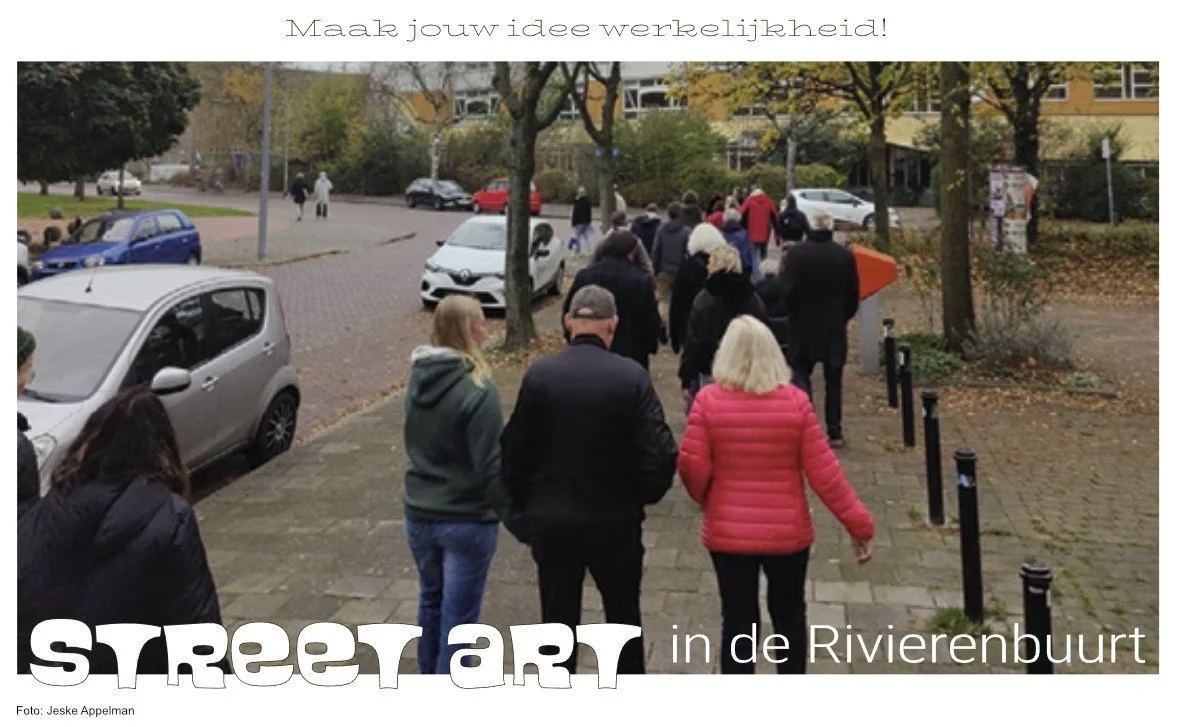
Vrijdag in de Buurt organised a walk through the area, to get inspiration for possible mural locations.
My sister in law Jeannette lives in the Rivierenbuurt, and showed me their local newspaper. Residents were given the opportunity to come up with ideas for a mural in their area. Through a voting procedure 3 ideas would be granted to be executed. Jeannette thought it a very nice idea if I could create something there. And so I started working.
I looked into the history of the area to discover what stories lived out there. What makes the Rivierenbuurt the Rivierenbuurt? What shapes her identity? What are the differences and similarities between then and now? And what would be a nice location for such a painting? The choice for me was quickly made: the transformer station of Enexis! What a difference it would be to have that building covered with a nice mural!

History
In the Middle ages the Rivierenbuurt had a totally different look from now. There were no buildings. There even was a construction ban! The area was situated just outside the citygates. In the case of a siege there had to be space for the field of fire. The wooden inns that were located alongside the Hereweg could easily be demolished in the wake of an attack.
So, no buildings, but instead there were vegetable gardens. Fruits and vegetables were being cultivated for the city. In a French document of 1808 this area is called ‘The Vegetable Garden of Groningen’. At the end of the 18th century, slowly some buildings started to appear. Garden dwellings en farmhouses appeared. (source: Wikipedia)

Based on the history I made a drawing with vegetable garden workers.
The city was growing, and threats of war disappeared. In 1874 the citywalls and gates were demolished. Labourer’s cottages were begin built randomly. Slowly they were being replaced by more reliable houses, factories and companies.
The demolishion of the Herepoort was hard to accept for many residents. The city counsil didn’t see why it should be spared, and eventually the front of the gate moved to Amsterdam, where it now stands in the gardens of the Rijksmuseum. You can read here about failed attempts to get the gate back to Groningen.

For the style I was inspired by post-war ceramic artist Anno Smith. He created decorative gable stones all over the city. Tile mosaics in bas-relief. They also appeared in the Rivierenbuurt. Often he depicted everyday subjects, such as labourers ofrplaying children.
My idea was well received, and got many votes. After clearing all the necessary permits and signing contracts I could begin. The preparation took quite some time. Eddy Taatgen, my partner, side-kick and personal photographer helped me along. The following pictures of me are taken by him.
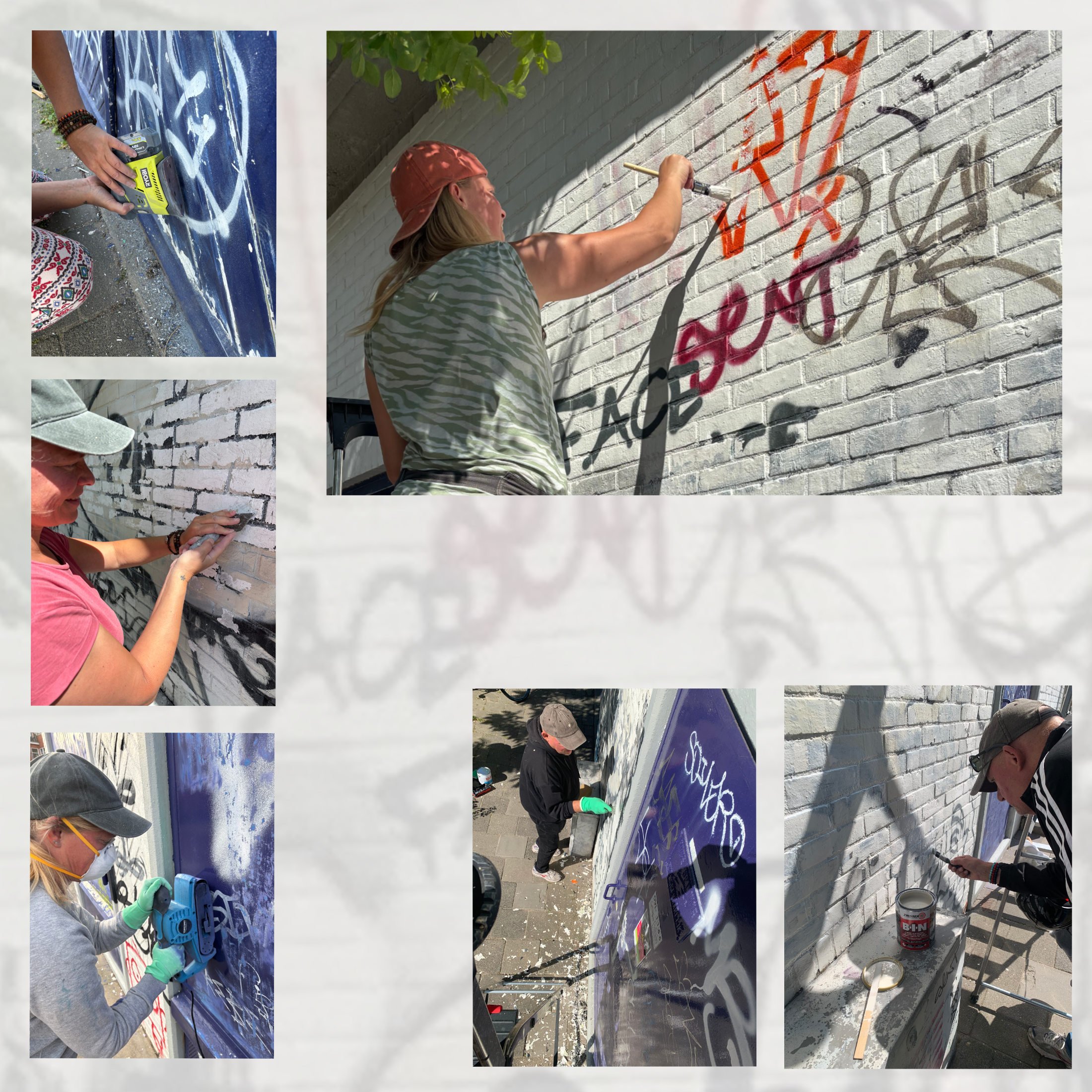


While working on the finishing touch of the vegetable gardens, local television was suddenly by my side! 🎬🎬Have a look! 🎬🎬
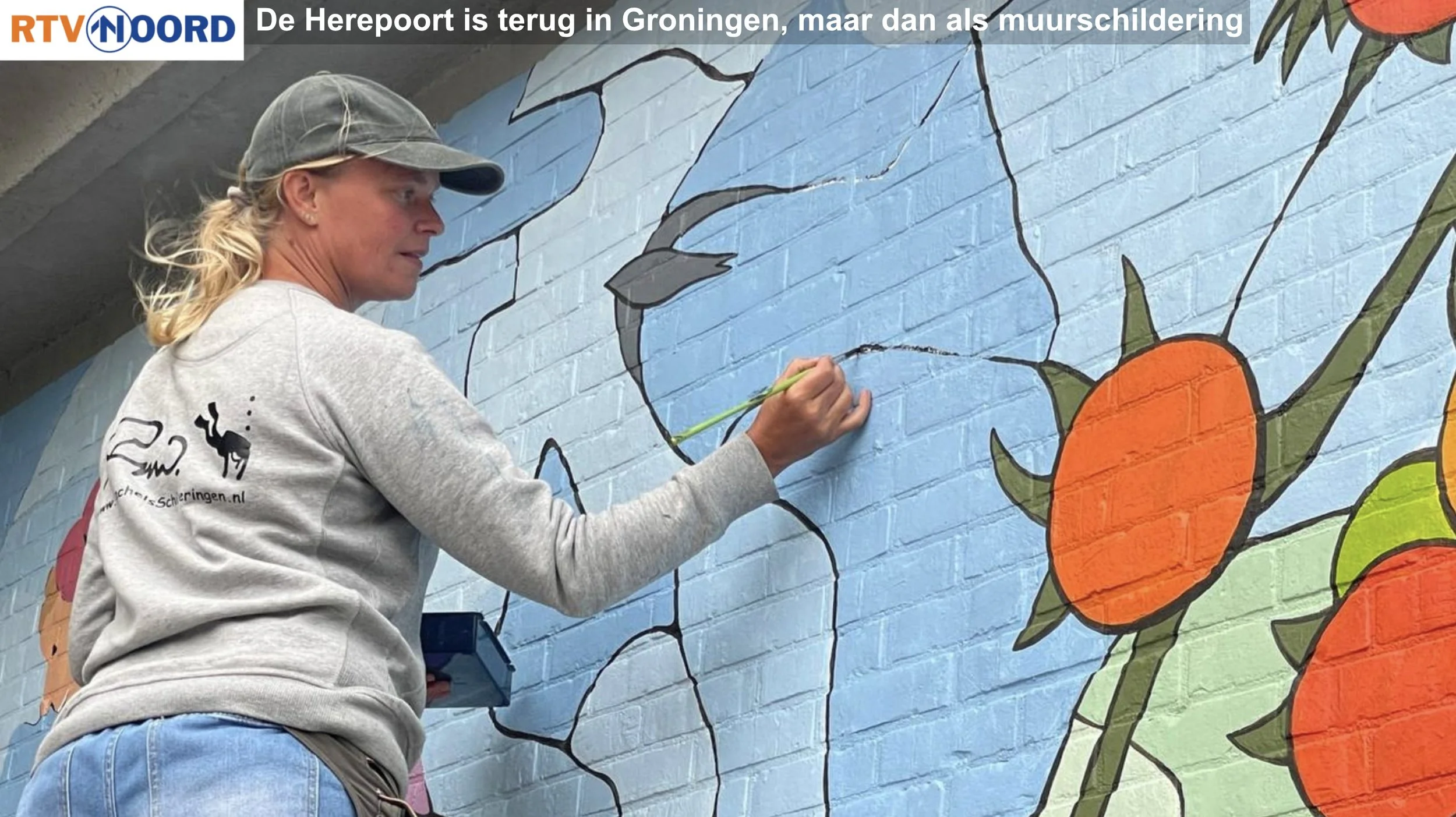
© RTV Noord
The Herepoort was not finished yet when the TV crew came around. Finishing it became a race against time. A heatwave made working quite hard. The paint dried quick, but with some late summer hours it was finished just in time for the opening.
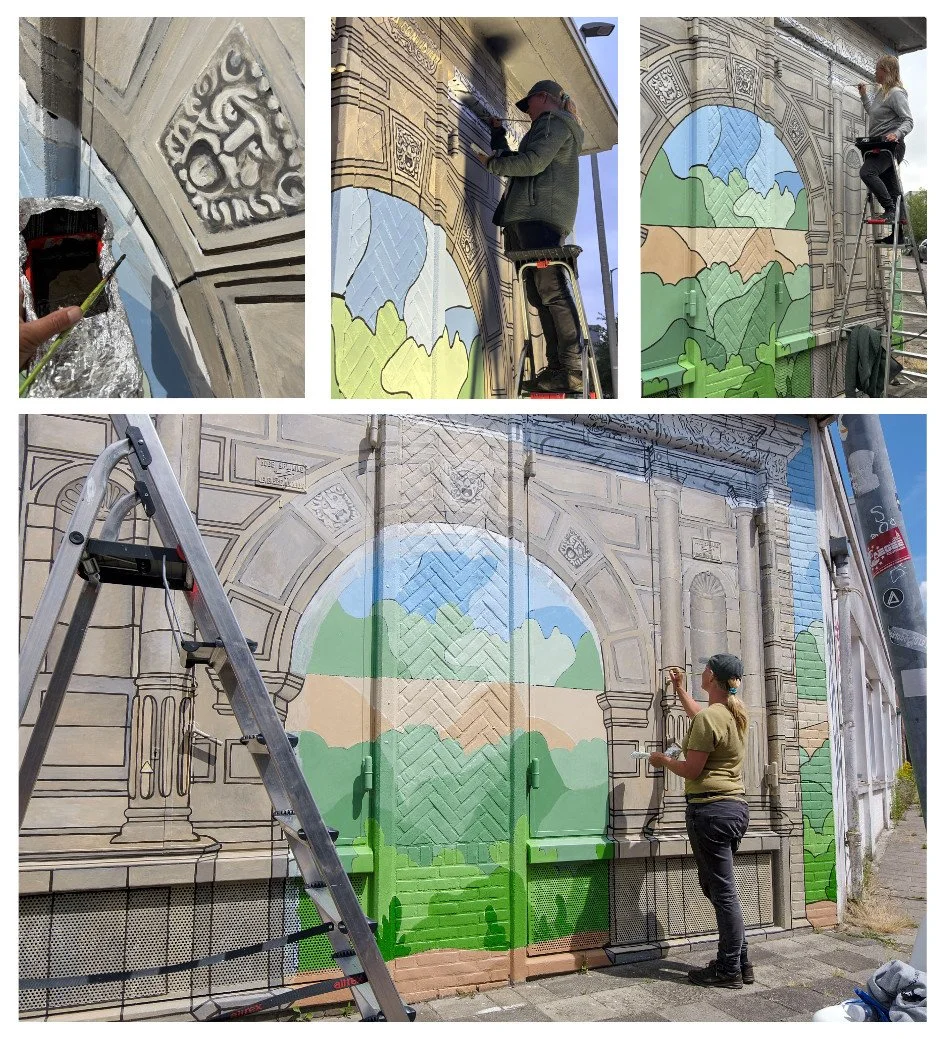
The Herepoort is coming back!
During the entire project the sun had been shining brightly. 15 minutes before the opening it started raining…. ‘A blessing from above, that’s what we say in India’. And indeed, with some 70 happy visitors, bagpipe player Tjitte de Wolf and some well organized snacks and drinks the opening was a true festivity!
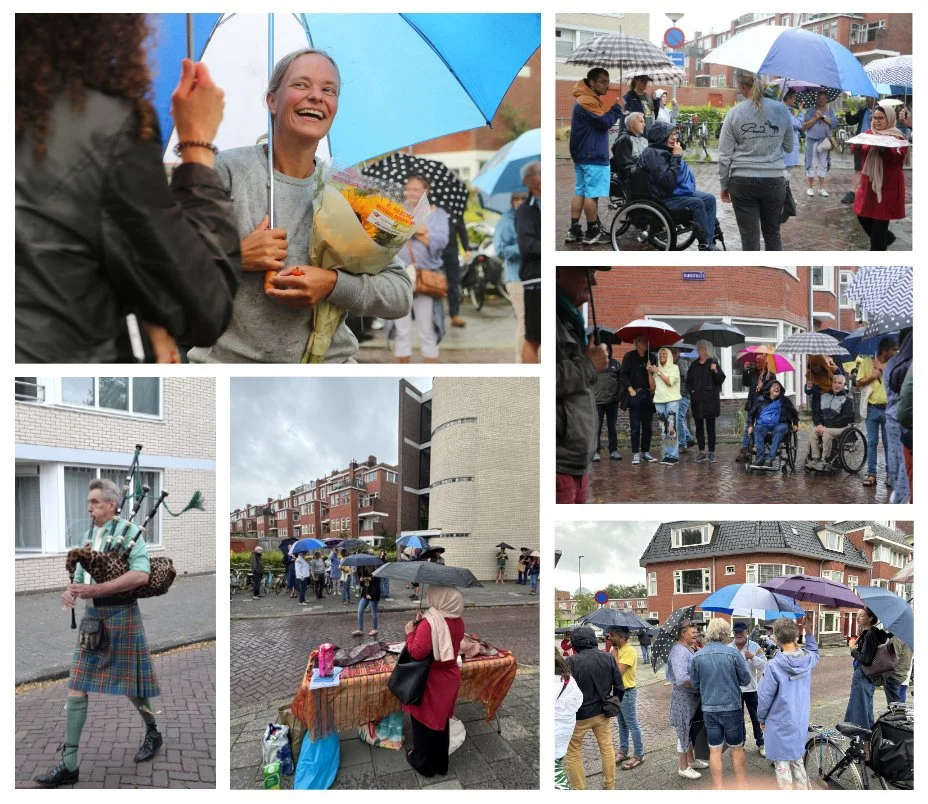
Final pictures by Eddy Taatgen en Jan Wiendels